Technology · Digital

Industrial Inkjet Printers

Direct-to-object decoration with no plate to change.

Three inkjet configurations from one engineering team — multi-pass, single-pass and cylindrical. Which one fits depends on how fast your line runs and how often the artwork changes. EPS builds all three, and pad printing besides, so we have no reason to steer you toward the wrong one.

500+ inkjet systems shipped
400+
Multi-pass systems shipped
100+
Single-pass DTO units shipped
45,000
Bottle caps per hour (XD-70)
< 60 sec
SKU changeover
The technologies

Three inkjet configurations.

Each one solves a different production problem. Every system ships with EPS engineering support, ink matched to your substrate, and the option for full custom automation.

Multi-Pass Inkjet
High-mix flexibility for moderate-volume production
  • Hundreds to a few thousand parts per hour
  • No setup penalty between jobs — designs can change weekly
  • Full process color: CMYK + white, with varnish, primer and expanded gamut options
  • Flat, semi-flat and fixture-friendly geometries
  • FJet XL, FJet XL Pro, FJet 24 and FJet RF platforms
Explore multi-pass →
Single-Pass Inkjet
High-volume production at full changeover speed
  • Up to 45,000 bottle caps per hour
  • SKU changeover in under 60 seconds
  • Variable data: UDI, serialization, anti-counterfeit codes, personalization
  • Earns its place above roughly 100,000 parts per SKU per year
  • XD Series, XD-360, XD-LT and XD-R platforms
Explore single-pass →
Cylindrical Inkjet
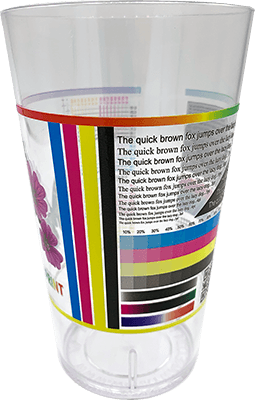
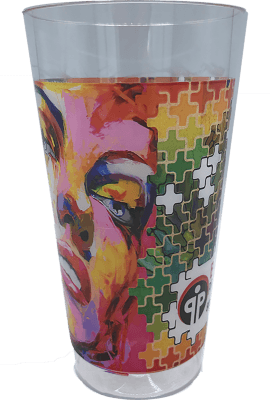
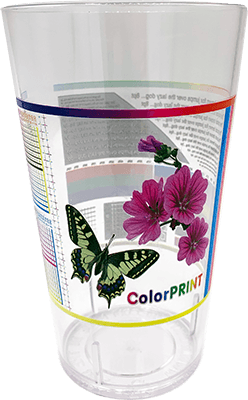
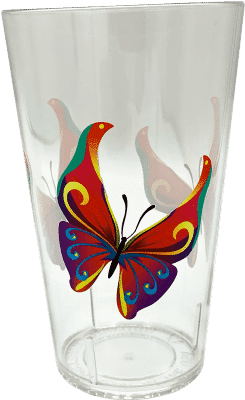
Printing directly on cylindrical objects such as glassware and bottles
  • Full 360° decoration on bottles, tubes and glassware
  • 1,200 parts per hour on the XD-360
  • Quick-release fixtures for fast changeover between container shapes
  • Taper compensation for shaped and conical containers
  • XD-360, BottleJet and BottleJet DualSpin Pro platforms
Explore cylindrical →
How it works

What an industrial inkjet printer actually does.

An industrial inkjet printer decorates a product by firing ink straight at it. There is no plate, no screen and no blanket in between — the artwork exists only as a file, so changing it costs a file swap rather than a tooling change. That single difference is what the whole business case rests on.

Nearly all industrial systems are drop-on-demand: the printhead ejects a droplet only where the image needs one, rather than running a continuous stream and deflecting the unwanted drops away. Less waste, no make-up solvent, and far tighter control over where the ink lands. The ink is then cured in place by UV-LED light, so it is dry before the part reaches the next station.

Multi-pass or single-pass

The two configurations differ in whether the part moves under the heads or past them, and it decides everything about the economics.

Multi-pass

The printhead carriage sweeps back and forth across a stationary part, building the image over several passes. Fewer heads, lower capital cost, and a print area limited only by the table. The trade is speed: more passes means more time per part.

Single-pass

The part travels once beneath a fixed array of heads spanning the full print width, and the image is complete when it comes out the other side. Speed is set by the conveyor, not by the number of passes — which is how a line reaches tens of thousands of parts an hour.

How to choose between them

Four questions settle it, in this order. (The multi-pass / single-pass trade-off has a full page of its own — rate bands, break-even logic and the upgrade path.)

  1. How much time goes into changeover? Add up setup, plate or screen changes, color matching and first-article approval across a week. If that number is large, digital is already paying for itself before you look at print speed.
  2. How many parts per SKU per year? Multi-pass suits hundreds to a few thousand an hour. Above roughly 100,000 parts per SKU annually, single-pass is usually the answer.
  3. What shape is the part? Flat and semi-flat parts go on a flatbed. Bottles, tubes and glassware need a cylindrical system that rotates the part under the heads. Compound curves and large three-dimensional surfaces need the print engine on a robot.
  4. What happens either side of the print? Pretreatment, curing, inspection and handling are usually where the labor actually sits. If those stations are manual, the printer is rarely the constraint.

What the system needs besides the printer

A printer is a platform; what you feed it decides the result. Every job needs three things matched to each other:

This is where durability is actually decided. Print does not fail because the machine is wrong; it fails because the ink, the substrate and the pretreatment were never matched to each other. Get that match right and an engineered cell holds scrap well under 1%. EPS supplies the full inkjet consumable set for exactly that reason — the system is the product, not the printer.

Where it wins

Industries we deploy industrial inkjet into.

Caps & Closures

Replacing direct offset for variable data, short runs and color flexibility — without giving up throughput.

Cosmetic Tubes & Bottles

Full 360° decoration with brand-quality color matching and the ability to run multiple SKUs on the same line.

Medical Devices

UDI compliance, lot-code marking and high-mix production for manufacturers running several geometries at once.

Promotional Products

High-mix, low-to-medium volume runs with personalization. Inkjet removes plate setup cost on every new design.

Who this fits

Is industrial inkjet the right answer for your line?

The question is almost never "is digital better than analog". It is how often your artwork changes and how many parts you run between changes. When changeover is eating the shift, inkjet is usually the cheaper machine per part even when it costs more to buy.

Right fit when

  • Changeover time is a real line constraint, not a rounding error
  • High SKU count — many short jobs rather than a few long ones
  • Design changes monthly, weekly, or per shift
  • You need variable data on the part: UDI, serials, lot codes, personalization
  • Photographic or continuous-tone artwork rather than a handful of spot colors
  • You are hitting a throughput or flexibility ceiling on screen, pad or offset

Not sure which technology fits your line?

Five questions about your manufacturing environment. We recommend the optimal EPS process and platform — with no sales call required.

Take the Decoration Optimizer →

Common questions about industrial inkjet printers

What is an industrial inkjet printer?

A production machine that decorates parts by firing ink directly at them, with no plate, screen or blanket in between. Because the artwork is a file rather than tooling, changing the design costs almost nothing and every part can carry different data. Industrial systems differ from office and wide-format printers in that they are built around a conveyor or a fixture and are engineered to run a specific part at a specific rate.

What is the difference between single-pass and multi-pass inkjet?

In multi-pass, a carriage of printheads sweeps back and forth over a stationary part and builds the image over several passes. In single-pass, the part travels once under a fixed array of heads that spans the full print width. Multi-pass costs less and handles a larger print area; single-pass is far faster because speed is set by the conveyor rather than by the number of passes. Multi-pass removes the tooling and the setup between jobs. Single-pass removes those and most of the production labor as well — the line runs machine-paced instead of operator-paced.

What is drop-on-demand printing?

Drop-on-demand means the printhead ejects a droplet only where the image needs one. The alternative, continuous inkjet, runs an unbroken stream and electrostatically deflects the unwanted drops into a gutter to be recycled — which is why continuous systems are used for date coding and marking rather than decoration. Drop-on-demand wastes no ink, needs no make-up solvent, and places ink precisely enough for photographic-quality decoration. Every EPS inkjet system is drop-on-demand with UV-LED curing.

Can industrial inkjet print on bottles, tubes and other cylindrical parts?

Yes — with a cylindrical system that rotates the part beneath the printheads so the image wraps a full 360 degrees with no seam. EPS builds three: the XD-360 for single-pass cylindrical production at around 1,200 parts an hour, and the BottleJet and BottleJet DualSpin Pro for multi-pass direct-to-bottle work. Shaped and conical containers are handled with taper compensation so the artwork stays true around the curve.

What materials can industrial inkjet decorate?

Most engineering plastics, glass, coated and bare metals, and many composites. The substrate governs the ink and often the pretreatment: low-surface-energy plastics such as polypropylene and polyethylene generally need surface activation before ink will hold. Send us the part and we will test adhesion on your actual material rather than a coupon that resembles it.

How durable is inkjet printing on plastic and glass?

Durable enough for medical, automotive and industrial service — but durability is a property of the system, not of the printer. It comes from matching three things: the ink chemistry, the substrate, and the pretreatment that prepares one for the other. Change the plastic and the ink usually changes with it. When those three are engineered together, print survives handling, cleaning and field use; when they are chosen separately, it does not.

Industrial inkjet or pad printing — which do I need?

It comes down to how often the artwork changes and how many parts you run between changes. Pad printing gives the lowest cost per part when the design is stable and volume per SKU is high, and it still owns physically awkward parts — recesses, compound curves, textured grips, parts too small or fragile for anything else. Inkjet removes the plate entirely, so it earns its place when you change over frequently, run many short jobs, or need variable data on every part. EPS builds both, which means we have no reason to talk you into the wrong one. The Decoration Optimizer walks through the trade-off, or a cost engineer will do it with your own numbers. The full decision framework is here — the table, the changeover math, and where each process wins.

Let's engineer your decoration line.

Tell us about the part, the substrate, and how often you change over. We will show you which of the three configurations costs least to run — or tell you that pad printing is still the better answer.