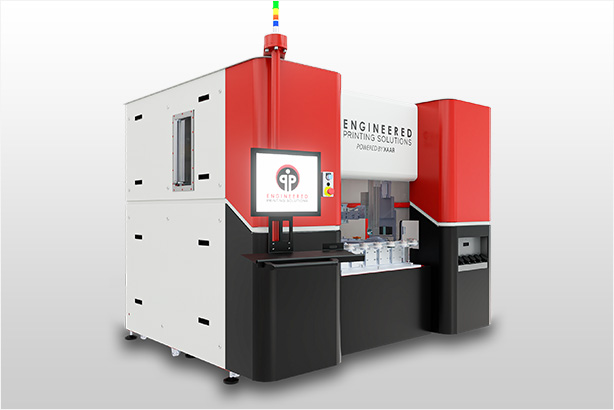
- Up to 5,000 parts per hour
- Full 360° decoration in a single pass
- WW + CMYK + OGV process printing with optional varnish
- Inline pre-treatment and UV-LED curing
- 720 × 720 dpi visual resolution · ±10µ color-to-color registration
- Bottles, tubes, cans and cups — plus round parts such as golf balls and pickleballs
Cylindrical Inkjet Printers
Direct-to-object decoration for round containers: glass and plastic bottles, cosmetic tubes, cups, cans, and round industrial and sporting parts. Three EPS platforms cover the range from job-shop flexibility to full production.
Three cylindrical platformsThree cylindrical platforms.
One geometry problem, three answers — chosen by how many of the same container you run and how much the shape varies. Every system ships with EPS engineering support and ink matched to your substrate.
- 6W UV-LED curing with inline mist extraction
- Quick-release bottle fixtures for fast SKU changeover
- Visible laser guide for x-axis setup
- White-ink agitation for consistent opacity
- Job-shop and pilot scale ahead of XD-360 production
- Seamless 360° printing with no visible seam at the wrap
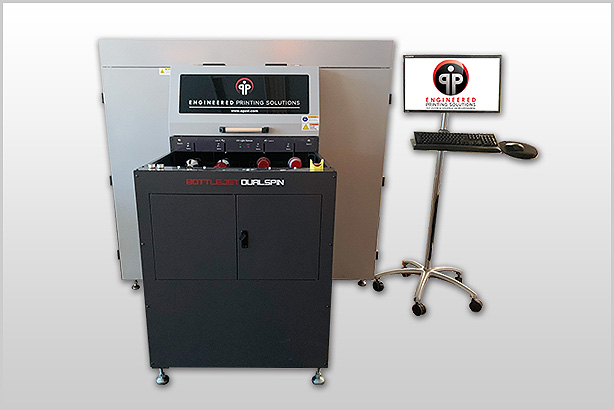
- 2 × 2 stations — load and unload one while the other prints
- Four parts at 170 × 230 mm, W+CMYK+V, in a 38-second production cycle
- Droplet compensation for tapered cylinders
- Automatic ink recirculation and programmable printhead maintenance
What makes printing a cylinder different.
A flat printer and a cylindrical printer solve different problems. On a flat part the printhead sweeps across a stationary surface. On a bottle, a tube or a cup the part itself has to turn under the heads, and the rotation has to stay locked to the ink being fired — or the artwork stretches, doubles, or leaves a seam where the wrap closes.
That synchronization is the whole engineering problem, and it is why a flatbed with a rotary jig bolted on is not the same machine as a system built for cylinders.
Where the seam goes
Screen and dry-offset decoration both leave a join where the image meets itself around the circumference — usually hidden in the artwork or in a deliberate gap. Direct-to-object inkjet can close the wrap completely, printing a continuous 360° image with no visible seam, because there is no screen or plate that has to start and stop somewhere.
Tapered parts need compensation
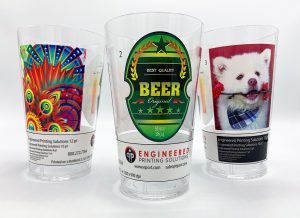
Very few containers are true cylinders. Cups, cosmetic tubes and most bottles taper, which means the circumference at the top differs from the bottom — so a rectangular piece of artwork wrapped around it will distort. The systems handle this with a droplet compensation algorithm that varies placement across the height of the part, keeping type straight and logos undeformed on a conical surface.
Single pass or multi pass, on a cylinder
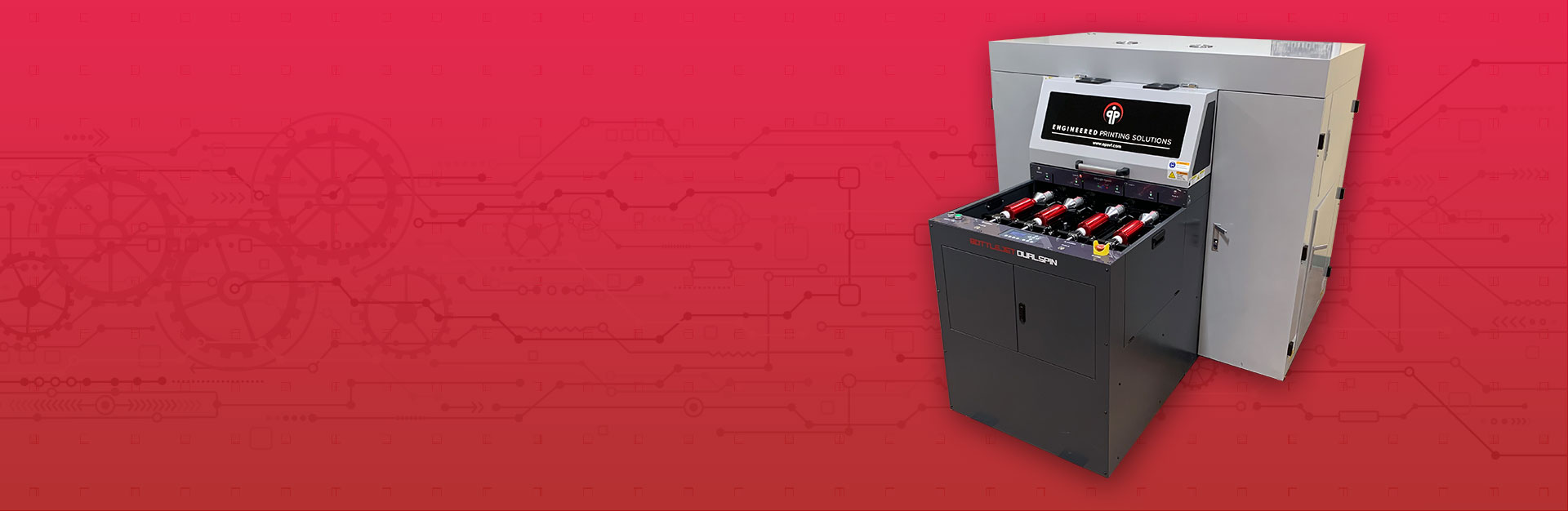
Multi-pass — BottleJet and DualSpin Pro
The carriage makes several passes as the part rotates. Lower capital cost, quick fixture changes between bottle shapes, and the flexibility to take on a wide mix of containers. The DualSpin Pro adds a second station so the operator loads one while the other prints.
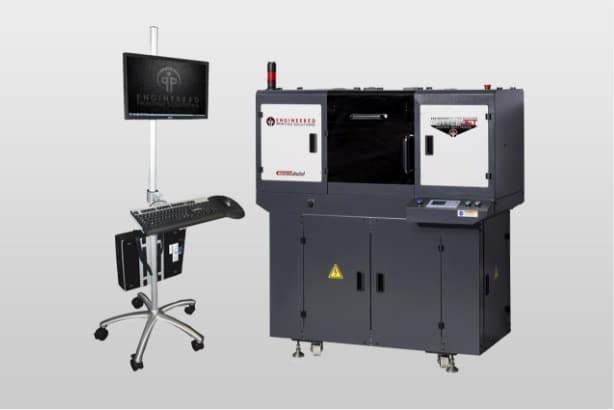
Single-pass — XD-360
The part makes one rotation beneath a fixed array and comes out decorated. Speed is set by the indexing rate rather than the number of passes, which is what makes it a genuine alternative to direct-offset on high-volume container lines.
What decides which one
Two questions, in this order. How many of the same container do you run between changeovers? High volume per SKU points at single-pass; a wide mix of shapes at moderate volume points at multi-pass. And how much does the shape vary? Quick-release fixtures make a multi-pass system far more tolerant of a container range that changes week to week.
Ink, substrate, pretreatment
Durability on glass, PET, HDPE and polypropylene is decided before the machine is chosen. Each substrate wants its own ink chemistry, and low-surface-energy plastics need surface activation before ink will hold at all. Get that combination right and decoration survives handling, filling and washing; choose the three separately and it will not, whatever machine printed it. Send us the actual container and we will test adhesion on your material rather than something similar to it.
What we decorate on these systems.
Bottles & Cosmetic Tubes
Full-wrap brand decoration on plastic and glass containers, with the ability to run several SKUs on the same line.
Glassware & Drinkware
Direct printing on glass and stainless drinkware — no label, no shrink sleeve, and artwork that changes without new tooling.
Cans & Closures
Short-run and variable-data decoration where direct offset would need a plate change for every design.
Round Industrial & Sporting Parts
Golf balls, pickleballs, plumbing supplies, hole saws — anything round enough that a flat printer cannot reach the whole surface.
Is a cylindrical system the right answer for your line?
The question is rarely whether inkjet can decorate a round part — it can. It is whether your container mix and run lengths justify a dedicated cylindrical cell over labels, sleeves or offset.
Right fit when
- Round or tapered parts: bottles, tubes, cups, cans, jars
- You want decoration on the container itself rather than a label or sleeve
- Artwork changes often, or every unit carries different data
- You need a full 360° wrap with no visible seam
- Container shapes vary and tooling costs are eating short runs
- You are replacing direct offset or screen and hitting changeover limits
Not sure which technology fits your line?
Five questions about your manufacturing environment. We recommend the optimal EPS process and platform — with no sales call required.
Take the Decoration Optimizer →Common questions about cylindrical printing
Can you print directly onto glass bottles and glassware?
Yes. Glass is one of the most common substrates on these systems — bottles, jars, drinkware and barware. Glass needs its own ink chemistry and usually a pre-treatment step to give the ink something to key into, both of which are part of the cell rather than an afterthought. Send us the actual glass and we will test adhesion on it.
What is a cylindrical inkjet printer?
A machine that rotates a round part beneath fixed or traversing printheads so the image wraps the circumference, with the rotation synchronized to the ink being fired. That synchronization is what separates a purpose-built cylindrical system from a flatbed with a rotary attachment — without it the artwork stretches or doubles where the wrap closes.
Can you print a full 360° wrap with no seam?
Yes. Because there is no screen or plate that has to start and stop, direct-to-object inkjet can close the wrap completely — the image meets itself with no visible join. Screen and dry-offset decoration normally leave a seam that has to be hidden in the artwork or in a deliberate gap.
Can you print on tapered or conical containers?
Yes, and most containers are tapered rather than truly cylindrical. The systems apply a droplet compensation algorithm that varies placement across the height of the part, so the circumference difference between top and bottom does not deform the artwork. Without it, straight type printed on a cup comes out curved.
Single-pass or multi-pass for cylindrical parts?
It comes down to how many of the same container you run between changeovers. Single-pass — the XD-360 — makes sense at high volume per SKU and competes directly with direct offset. Multi-pass — BottleJet and DualSpin Pro — costs less, changes fixtures quickly between shapes, and suits a wide container mix at moderate volume.
Will the print survive filling, handling and washing?
When the system is engineered as a set, yes. Durability is decided by matching three things — the ink chemistry, the substrate, and the pre-treatment that prepares one for the other. Low-surface-energy plastics such as polypropylene and polyethylene need surface activation before ink will hold at all. Matched properly, an engineered cell holds scrap well under 1%; chosen separately, no machine will save it.
Send us the container.
Tell us the shape, the substrate, how many you run between changeovers, and what the artwork has to do. We will tell you which of the three fits — or that a label still costs you less.