
 About
About Contact Us
 (800) 272-7764
“No Two Print Machines Are Alike”—What Does That Mean?
At Engineered Printing Solutions, we design direct-to-object product-marking machines with custom automation and part-handling. As it says on the bottom of every page on this site, “No two print machines are alike.”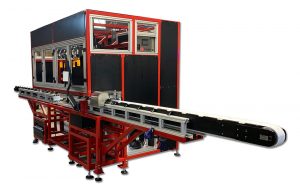
This is no mere slogan. So many factors go into the design of a particular printing machine, from part topography and substrate to image size and quality to desired throughput speed.
And this does not even broach the performance requirements of the part. Perhaps it is an engine part that will be exposed to heat, dirt, and solvents. Perhaps the part is drinkware and the image must withstand multiple trips through the dishwasher. Every project has its unique challenges, and for this reason, no two print machines are alike.
This fact has several implications, one of them being that we do not have an inventory of standard machines sitting on the shelf that we sell directly into various industries. Another consequence of designing and building bespoke part-decorating equipment is that over the years we have learned the right questions to ask potential customers in order to create the printing machine that fits their needs perfectly. As a result, our Sales Engineers have gained expertise in Operations Management.
It all starts with a few basic questions. What is the part topography? What is the substrate? hat is the size and desired quality of the image to be printed? And perhaps most importantly, what is the desired throughput in parts per hour? Answers to these questions will help our Sales Engineers to find the right solution for you.
I was reminded of the depth of knowledge among our sales staff—many of whom started with the company as technicians, so they have hands-on knowledge of the machinery they sell—at our weekly sales meeting recently. As is often the case, the Sales Engineers were discussing a particular project that one among them was wrestling with for a potential customer. The Sales Engineer was proposing a digital solution but was struggling both with the curvature of the part and also the desired throughput. Initially, he proposed increasing throughput by adding a second print array, but was discouraged from doing so by his colleagues, as multiple print arrays quickly become prohibitively expensive.
One person pointed out that the limited-palette artwork and part topography suggested that an automated pad printing solution might be more appropriate and cost-effective for the customer. At this point, someone proposed twin independent pads in order to double the throughput. A rotary table was also proposed as a solution to increase throughput, but it was quickly concluded that neither of these solutions addressed the real constraint to higher throughput: the fact that the operator still only has two hands with which to load parts. (If you think about it, a rotary table primarily serves the purpose of permitting parts to move past inline pretreatment, but it does nothing to increase throughput, as the same person must load parts, whether onto a rotary table or directly to the print station.)
The important take-away from this is that every project at EPS starts with basic questions regarding throughput, part topography, and image size and quality. All hardware considerations flow from this information. Truly, no two print machines are alike.